
- Login

Experiential data is becoming an essential component of SEND quality assurance, but how can you effectively capture it?

For Education, Health and Care Plans, performance data has traditionally focused on timeliness, compliance, and completion rates. While these metrics are important, they only tell part of the story.
What is often missing is a clear, structured understanding of how children, young people, parents, and carers actually experience the EHCP process. Their perspective is critical - not only to understanding quality, but to improving outcomes in a meaningful way.
This is where experiential data is becoming an essential component of SEND quality assurance.
Experiential data captures the lived experience of families and young people as they move through the EHCP journey. It goes beyond whether a plan was completed on time and instead explores whether it was the process was effective and supportive, and whether the EHCP was understandable.
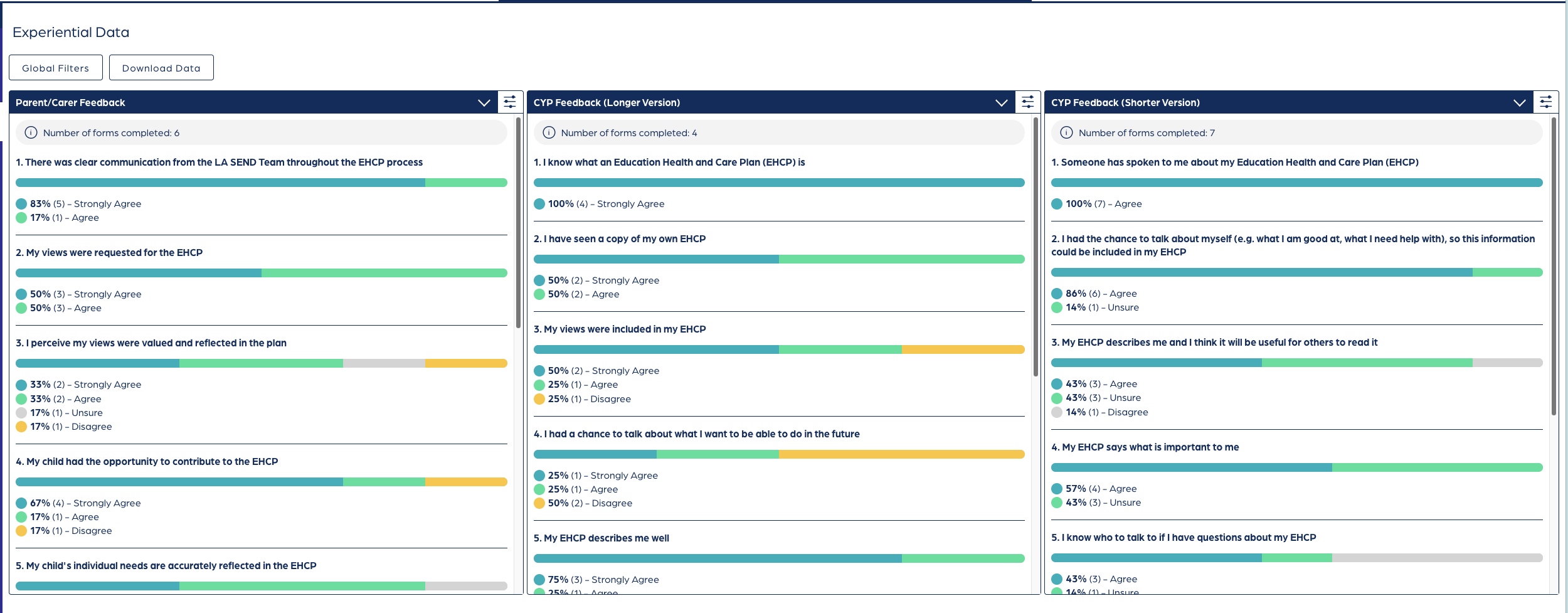
For example, there was clear communication from the LA SEND Team throughout the EHCP process, I perceive my views were valued and reflected in the plan, my child's individual needs are accurately reflected in the EHCP, I know what an Education Health and Care Plan is, my EHCP describes me well.
These are the kinds of insights that cannot be found in quality performance dashboards. When gathered consistently, they provide a richer and more nuanced view of EHCP impact and process quality across a local area.
Local authorities are increasingly expected to demonstrate not just activity, but impact. This means being able to evidence how well services are working from multiple perspectives.
By combining timeliness data, audit findings, and experiential feedback, local areas can build a far more complete understanding of performance. Quantitative data shows what is happening, audit processes assess technical quality, and experiential data reveals how that work is received and applied in real life.
Together, these layers create a stronger evidence base for both improvement activity and inspection readiness.
An example of how to capture, is the use of short, structured surveys that allow children, young people, and parents or carers to share feedback in a simple and accessible way. Behind the scenes, this feedback can be organised into clear themes and presented in an intuitive dashboard, making it easier for teams to identify patterns and trends.
This kind of approach creates a direct and ongoing connection between families and the local area partnership. Instead of feedback being occasional or informal, it becomes a consistent and reliable source of insight that actively shapes service improvement.
The impact of a good EHCP is seen in the day-to-day experiences of children and young people. Capturing feedback at scale allows local authorities to understand not just isolated success stories, but overall trends.
An example of experiential feedback from a parent:
“The EHCP is clear and detailed, and I felt it genuinely reflected my child’s needs and helped the school understand how to support her. Staff can read the document, understand and know how to help. The whole process felt supportive and now my child is thriving socially and academically. It’s been amazing to see. She’s happy at school now.”
Insights like this, when collected systematically, provide powerful evidence of what is working well, while also highlighting areas that need attention.
When experiential data becomes part of regular quality assurance processes, it adds a valuable new dimension. Rather than relying solely on professional review, teams gain direct insight from those receiving the service.
This allows local authorities to identify strengths with greater confidence and demonstrate them clearly during inspection. At the same time, it helps pinpoint specific areas for improvement, ensuring that change is targeted and meaningful.
Importantly, it also strengthens co-production. By creating a structured way for families and young people to share their views, local authorities can move closer to genuinely person-centred services.
Successful implementation often starts with collaboration. Working closely with parent carer forums helps ensure that the approach feels accessible, inclusive, and worthwhile from the outset. Their involvement can be key in encouraging engagement and building trust.
Many local areas begin with a short pilot, selecting a small number of EHCPs each month to test the process. Families are contacted and supported to share their feedback, sometimes through guided conversations to ensure all voices are heard. Over time, the process is refined to make it efficient and sustainable.
The findings are then brought together alongside audit and performance data in regular SEND quality assurance reporting. This ensures that the insights gathered are not only heard, but used.
As expectations continue to grow, it is no longer enough to measure success by process alone. A truly effective EHCP system must combine performance data, professional judgement, and lived experience.
Experiential data completes that picture.
By embedding it into everyday practice, local authorities can ensure their services remain responsive, evidence-driven, and focused on outcomes ultimately improving the experience and life chances of children and young people with SEND.
After great success in our annual review module capturing child, young person and parent carer experiences. We’ve just launched the simple surveys and dashboard in our EHCP QA module, generating rich, structured insights into plan/report quality presented in an intuitive reporting dashboard.
An easy way to capture and analyse lived experiences.
Start the conversation
Get in touch to find out how we can support your local area to start capturing experiential data
Images from the Invision360 experiential data feature


.jpg)
.jpg)