- Login

Why we rebuilt QEPA around practice development, and what Principal Educational Psychologists told us required change

Philip Stock, Founder and CEO, Invision360 · Former Principal Educational Psychologist
I have worked in, and led, educational psychology services across several local authorities. As a Principal Educational Psychologist, quality assurance always mattered to me. But demand and capacity shaped how fully any QA framework could be put into practice.
For me, it was always about closing the gap between what we aspired to and what was happening day to day, while recognising the pressures on services and on individual EPs. Getting that balance right is what QEPA is designed for: an efficient, purposeful way of auditing educational psychology advice that fits into any service's existing quality assurance framework.
The original QEPA brought structure and consistency to auditing statutory EP advice. But listening to the services using it, one question kept coming back: what does an Educational Psychologist actually get back from an audit?
We brought together a working group of Principal EPs from local authority services and revisited every piece of feedback on the original QEPA. The messages were clear:
The new QEPA is our answer to all four. But the second is the one I care about most.
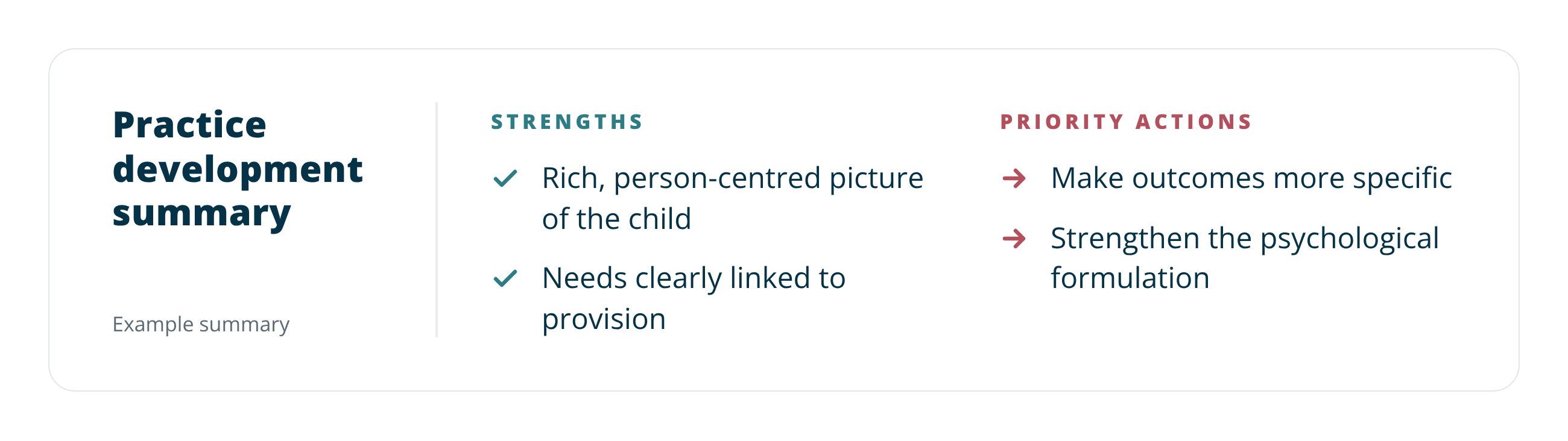
Every audit completed in QEPA now produces a practice development summary for the individual EP. It sets out the strengths of that piece of advice, and the priority actions that would make the biggest difference. One click, and it is ready to share.
That changes what an audit is for. Used between drafting and finalising a report, it gives quick, purposeful feedback while it can still shape the advice a family receives. In supervision, it grounds reflection in real examples. Across a service, it shows where CPD will have most impact.
"The new themes, greater nuance in scoring, and a stronger focus on the key principles underpinning high-quality EP practice provide a more meaningful way to evaluate the quality of advice… a powerful tool for both quality assurance and professional development."
– Amanda Ryzman, Principal Educational Psychologist, Barnet Council
The new criteria are more comprehensive, more robust and more nuanced. They were developed with Principal EPs and shaped by feedback from EP services across the country. They are organised into eight themes that reflect what high-quality educational psychology advice looks like in practice:
Greater nuance in scoring means an audit can recognise strong practice and pinpoint precisely what would strengthen it, right down to the individual criterion.
When colleagues audit the same advice, QEPA compares their judgements automatically. A mixed team builds a shared understanding of what good looks like, and audits to a consistent standard.

Run an automatic AI audit alongside the manual one. QEPA cross-references the outcomes, showing where judgements agree and where they differ. AI helps EPs work faster and more consistently, while professional judgement stays with them.

Compare your service's outcomes, theme by theme, with the average achieved by other services using QEPA. See where you lead and where to focus.
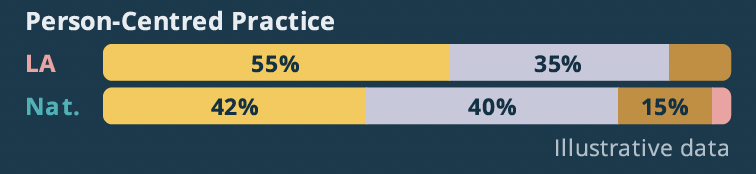
Move from overall grade, to theme, to individual criterion. Build priorities into your service development plan and evidence progress over time.

"I particularly like the automated moderation feature, ensuring EPs within the same service have a shared understanding of 'what good practice' looks like in a report and are auditing to a consistent standard."
– Principal Educational Psychologist, Greater London Region
QEPA has always been built with Educational Psychologists, and that will not change. We continue to work closely with Principal EPs across the country, and every improvement starts with what services tell us.
If quality assurance in your service feels more like compliance than development, I would love to show you what is possible.
Philip Stock is the founder and CEO of Invision360. He began his career training as an Educational Psychologist, before becoming Principal Educational Psychologist and Head of SEND and Inclusion Services in a major London Borough. He founded Invision360 to give SEND and EP services the tools he wished he had in practice. QEPA is shaped by that experience and by a network of Principal EPs who continue to guide its development.